


Building on the massive success of the E-GMP (Electric Global Modular Platform), Kia officially announced the development of its next-generation EV platform during the 2026 CEO Investor Day, an architecture that many enthusiasts hope will definitively solute the Integrated Charging Control Unit (ICCU) problems seen in earlier models. This new architecture is designed to further strengthen Kia’s competitiveness in the global EV market by integrating “state-of-the-art” technologies that push the boundaries of performance, intelligence, and cost-efficiency. As Kia transitions into a sustainable mobility solutions provider, this platform serves as the foundation for its upcoming fleet of software-defined vehicles (SDVs).
Breakthrough Performance and Efficiency
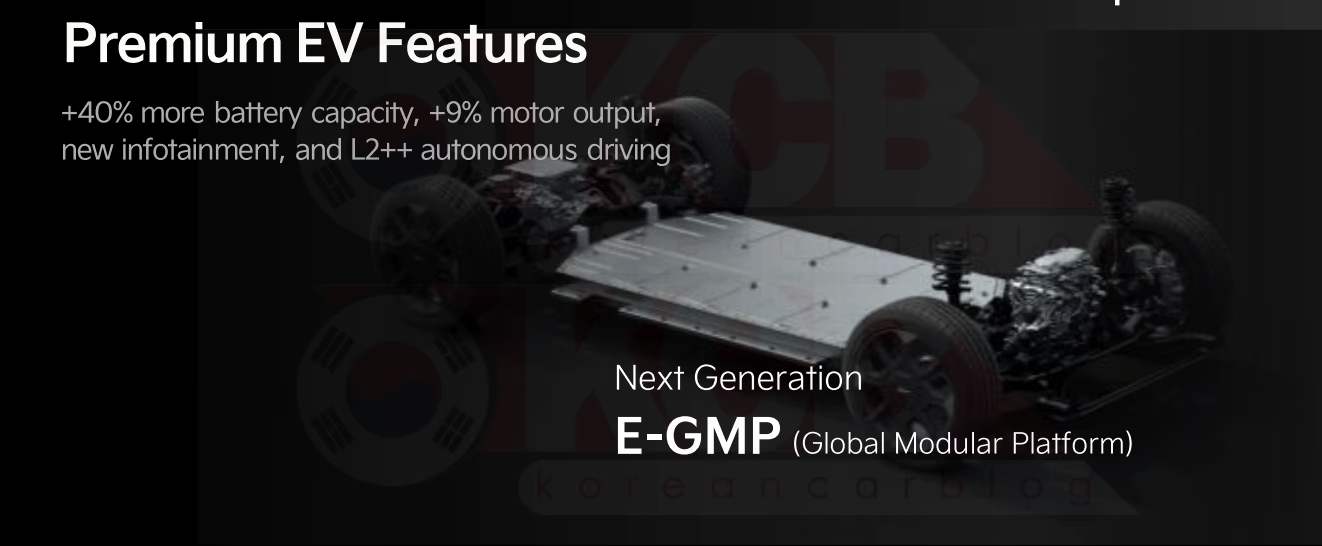
The successor to the E-GMP is not merely an incremental update; it represents a significant leap in hardware capabilities. According to the strategic roadmap, the platform will introduce substantial improvements in power and energy density:
- Battery Capacity: A staggering 40% increase in battery capacity compared to current standards, allowing for significantly longer ranges that meet the needs of long-distance travelers.
- Motor Output: An 8% increase in motor output, ensuring that the next generation of Kia EVs delivers superior acceleration and driving dynamics.
- Fifth-Generation Battery Technology: The new vehicles will be equipped with fifth-generation batteries. These units are specifically engineered to improve cost efficiency—making EVs more accessible—while simultaneously maximizing energy density.
Solving Technical Challenges and Enhancing Reliability
One of the most anticipated aspects of this transition is the opportunity to refine vehicle architecture for maximum reliability. Industry analysts and consumers alike hope that this new platform will provide a definitive solution to hardware vulnerabilities that have affected some early-generation electric models. By redesigning the power management systems from the ground up, Kia aims to ensure that the next generation of EVs offers not only superior performance but also the robust electrical reliability required for mass-market adoption.
Intelligence and Autonomous Driving
Beyond hardware, the next-generation platform is a hub for digital innovation. Kia is focusing heavily on the user experience through a completely revamped new infotainment system designed to integrate seamlessly with the user’s digital life.
Furthermore, the platform will debut Level 2++ autonomous driving capabilities. This advanced driver-assistance system (ADAS) represents a sophisticated midpoint toward full automation, offering enhanced safety features and hands-off capabilities under specific conditions, powered by high-performance computing and a suite of advanced sensors.
Strategic U.S. and Global Launch
This platform is a critical component of Kia’s goal to lead the EV transition. While specific model names are yet to be confirmed, the architecture is expected to underpin major global launches starting in the late 2020s. For the North American market, this platform will be instrumental in achieving Kia’s target of a diverse, electrified sales mix, supported by localized production at facilities like the HMGMA (Hyundai Motor Group Metaplant America).
By combining increased range, improved power, and cutting-edge software, Kia’s next-generation platform is set to define the standards of the electric era for years to come.


Comments
No comments yet. Be the first.