

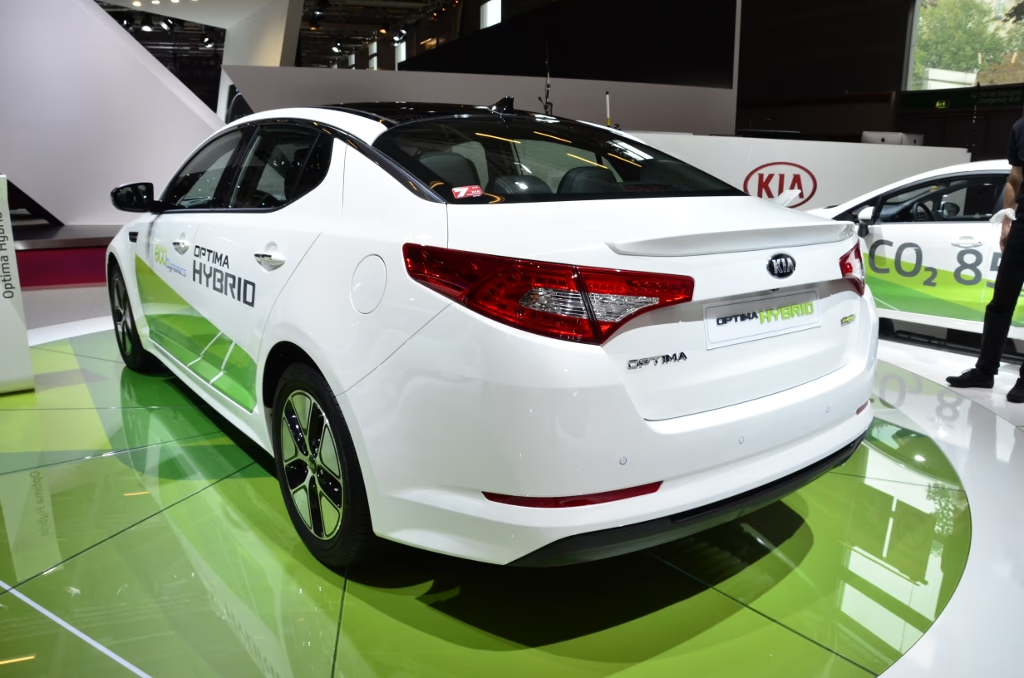
Hyundai et KIA abaissent les taux de consommation de la plupart des modèles 2011-2013 en raison d'une déclaration de kilométrage exagérée qui affecte la grande majorité de la gamme des deux constructeurs.
Aujourd'hui, le PDG de KIA Motors America (KMA), Byung Mo Ahn, a publié un message corporatif s'excusant auprès des clients et des concessionnaires pour les erreurs et interprétations procédurales qui ont conduit à cette action. Dans cette lettre ouverte, Mo Ahn a déclaré qu'ils commenceront à réétiqueter la consommation de carburant chez les concessionnaires et dans les médias, et plus important encore, KMA indemnisera les propriétaires actuels et anciens en couvrant les coûts de carburant supplémentaires découlant des ajustements de MPG.
Les principaux modèles concernés par cette campagne sont la Hyundai Accent 2012, l'Elantra 2012/13 et la Veloster 2012/13 (toutes homologuées à 40 MPG sur autoroute selon l'EPA, désormais revues à 36-38 MPG selon les modèles) et la quasi-totalité de la gamme KIA, y compris l'Optima Hybrid, la Rio, la Soul, le Sportage et certains modèles Sorento équipés de moteurs GDi.
Cependant, les nouvelles estimations EPA pour ces modèles KIA ne sont pas encore connues. Restez à l'écoute pour plus de détails.


Commentaires
8 commentairesI think we need new and better ways of talking about mileage. I get that the official figures are highly synthetic - the problem is that they don't *sound* synthetic. They sound like claims of expected mileage, which they definitely aren't.
I agree. There are far too many variables to effect mileage. To state claims as they do actually leads to many people experiencing lower results than expected. Providing something that will equated to more accurate results that most people can likely achieve would be difficult, but should be worked towards.
Too bad they have to do this; the cars speak for themselves, even if the mileage isn't quite what is claimed. I've never seen too many cars which did return the EPA estimates anyway. After all, unless you are operating the vehicle in the same conditions in which it is originally tested, you're not too likely to see that mileage anyway.
I usually get better than the EPA estimates bu as much as 10 percent, I also deal with a lot of traffic backed up behind me and getting honked at when the light turns(for not taking off like in a drag race)
Too bad they have to do this; the cars speak for themselves, even if the mileage isn't quite what is claimed. I've never seen too many cars which did return the EPA estimates anyway. After all, unless you are operating the vehicle in the same conditions in which it is originally tested, you're not too likely to see that mileage anyway.
I usually get better than the EPA estimates bu as much as 10 percent, I also deal with a lot of traffic backed up behind me and getting honked at when the light turns(for not taking off like in a drag race)
I think we need new and better ways of talking about mileage. I get that the official figures are highly synthetic - the problem is that they don't *sound* synthetic. They sound like claims of expected mileage, which they definitely aren't.
I agree. There are far too many variables to effect mileage. To state claims as they do actually leads to many people experiencing lower results than expected. Providing something that will equated to more accurate results that most people can likely achieve would be difficult, but should be worked towards.