


For decades, the hierarchy within the South Korean automotive industry was undisputed. When Hyundai Motor Company acquired Kia (formerly Kyungsung Precision Industry) in 1998, critics labeled the move a burden, viewing Kia as a “lump of insolvency.” Kia spent years in the shadow of its parent company, often relegated to the role of the group’s “entry-level” younger brother. That narrative has officially shifted. In a historic turn of events, Kia has defeated Hyundai to become the best-selling automobile brand in Korea.
The Historic Sales Flip
According to ETNews data released on the 4th, Kia’s domestic sales reached 55,045 units last month, edging out Hyundai’s 54,051 units. This marks the first time Kia has claimed the top spot since joining the Hyundai Motor Group nearly 30 years ago.
While Kia’s sales grew by 7.9% year-on-year, Hyundai experienced a significant 19.9% slump. This reversal is not a fluke but the result of a calculated, multi-year strategic pivot.
SUVs: The Engine of Growth
The primary catalyst for Kia’s dominance is its aggressive focus on the SUV and RV market. While Hyundai maintained a sedan-centric identity with staples like the Grandeur and Sonata, Kia bet on the shift in consumer demand toward spacious, high-performance family vehicles.
- The Sorento Factor: The mid-size Sorento SUV has become a national phenomenon. For two consecutive years, it has outperformed the Hyundai Grandeur to become Korea’s #1 best-selling car, moving over 100,000 units annually.
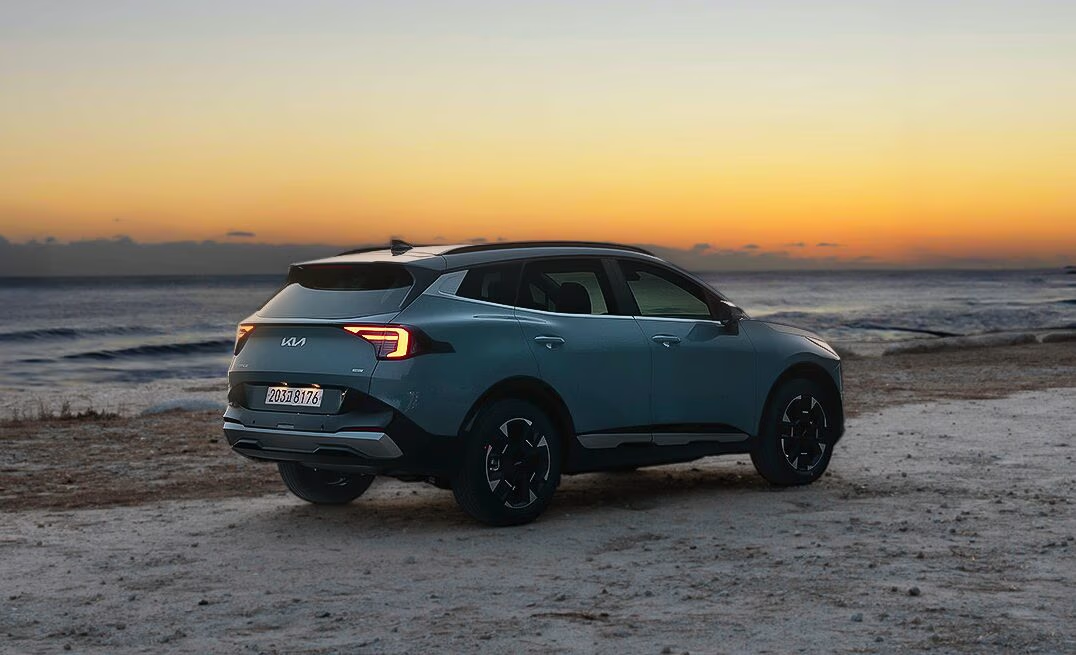
- The Hybrid Advantage: By introducing hybrid variants for the Sportage and Carnival, Kia captured buyers wary of rising oil prices.
- Sales Comparison (Jan–April 2026):
| Kia Model | Sales Units | vs. | Hyundai Model | Sales Units |
|---|---|---|---|---|
| Sorento | 39,000 | Santa Fe | ~21,000 | |
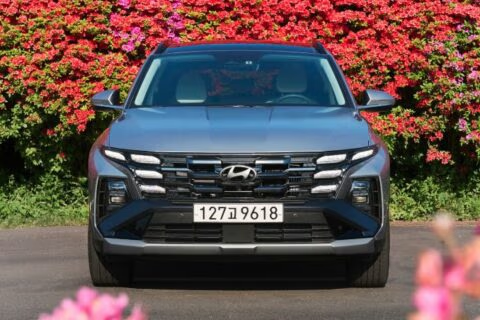
| Sportage | 20,327 | Tucson | 15,014 | |
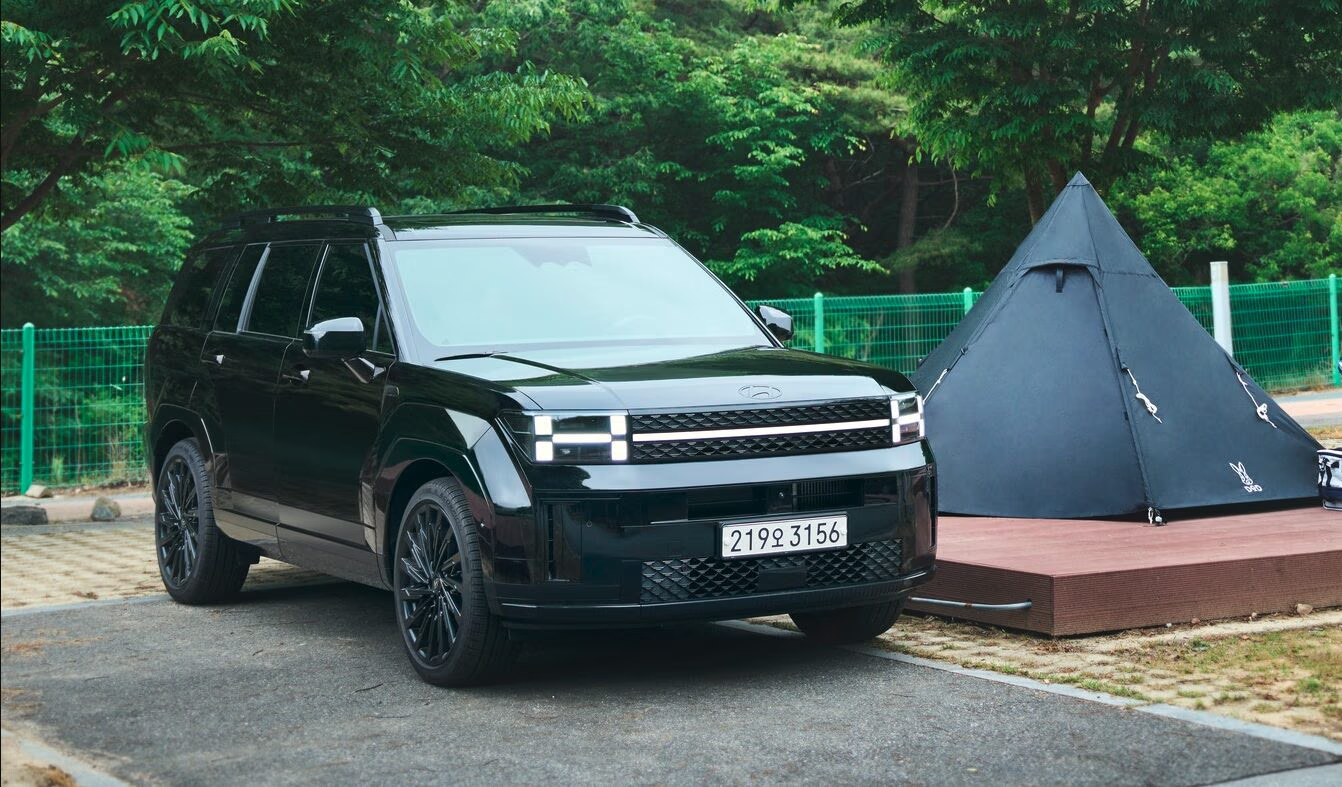
| Carnival | 19,392 | Palisade | 13,631 |
Why the Sorento is Winning the “Brother” War
The Sorento is currently the only vehicle in Korea to exceed 100,000 units in annual sales. Analysts attribute this to Kia reading the room better than Hyundai:
Diversified Strategy: While Hyundai leaned into the bold, boxy redesign of the new Santa Fe, Kia’s Sorento maintained a more balanced, sophisticated aesthetic that has appealed to a broader demographic.
Ride Quality: Kia addressed the traditional “stiff” ride of SUVs, making them viable replacements for premium sedans.
Space Utilization: Kia maximized interior dimensions, appealing to the growing “outdoor lifestyle” and “car-camping” trends in Korea.
The Design Factor: Familiarity vs. Experimentation
A core reason for Kia’s surge is its design philosophy. While Hyundai has taken bold, sometimes polarizing risks, Kia has leaned into “refined familiarity.”
Sorento vs. Santa Fe: The Battle of Aesthetics
The rivalry between the Kia Sorento and Hyundai Santa Fe is the clearest example of this divide.
- The Sorento’s Winning Look: The Sorento maintains a sophisticated, athletic silhouette that feels “stately” and premium. It has become a national favorite, surpassing even the Grandeur sedan to become the #1 best-selling car in Korea.
- The Santa Fe’s Gamble: Hyundai’s recent radical redesign of the Santa Fe—characterized by its boxy, futuristic rear—has alienated some traditional buyers. In early 2026, the Sorento moved roughly 8,388 units in a single month, while the Santa Fe struggled to crack the top 10 with just 3,379 units.


Comments
2 commentsAs a Kia owner, Kia’s designers (while far from perfect) consistently put out a better-looking product, in the eyes of my social circle. Hyundai (and sometimes Kia, to be fair) seem to find ways to have a generally good-looking vehicle that gets spoiled by some WTF? decisions. Examples include the “almost but not quite parallel” character lines on the side of the current Tucson. It looks like a mistake, every time. On the 2nd gen Niro, the lower side cladding connects to the front fender cladding but not the rear. BOTH OR NEITHER, you so-called designers! Then throw in the out of place silver parts on the front and rear fasciae. I had a Kia salesman the other day tell me that the Carnival’s silver C-pillar (for no apparent reason) turns people off. The Santa Fe’s turn signals being almost on the ground, etc etc. But the general shapes of the vehicles are REALLY GOOD. If H/K could clean up their details, they could have gorgeous vehicles all the way through the line.
Yes, that’s accurate. The reason behind Kia’s recent success over Hyundai is their upcoming launch of a new set of Hyundai models before the end of the year. These models will feature a completely revamped design, including the Elantra, Tucson, and Bayon. Alternatively, they might also release updated versions of popular models like the Santa Fe, but I’m not optimistic about the last. Thanks for the comments.