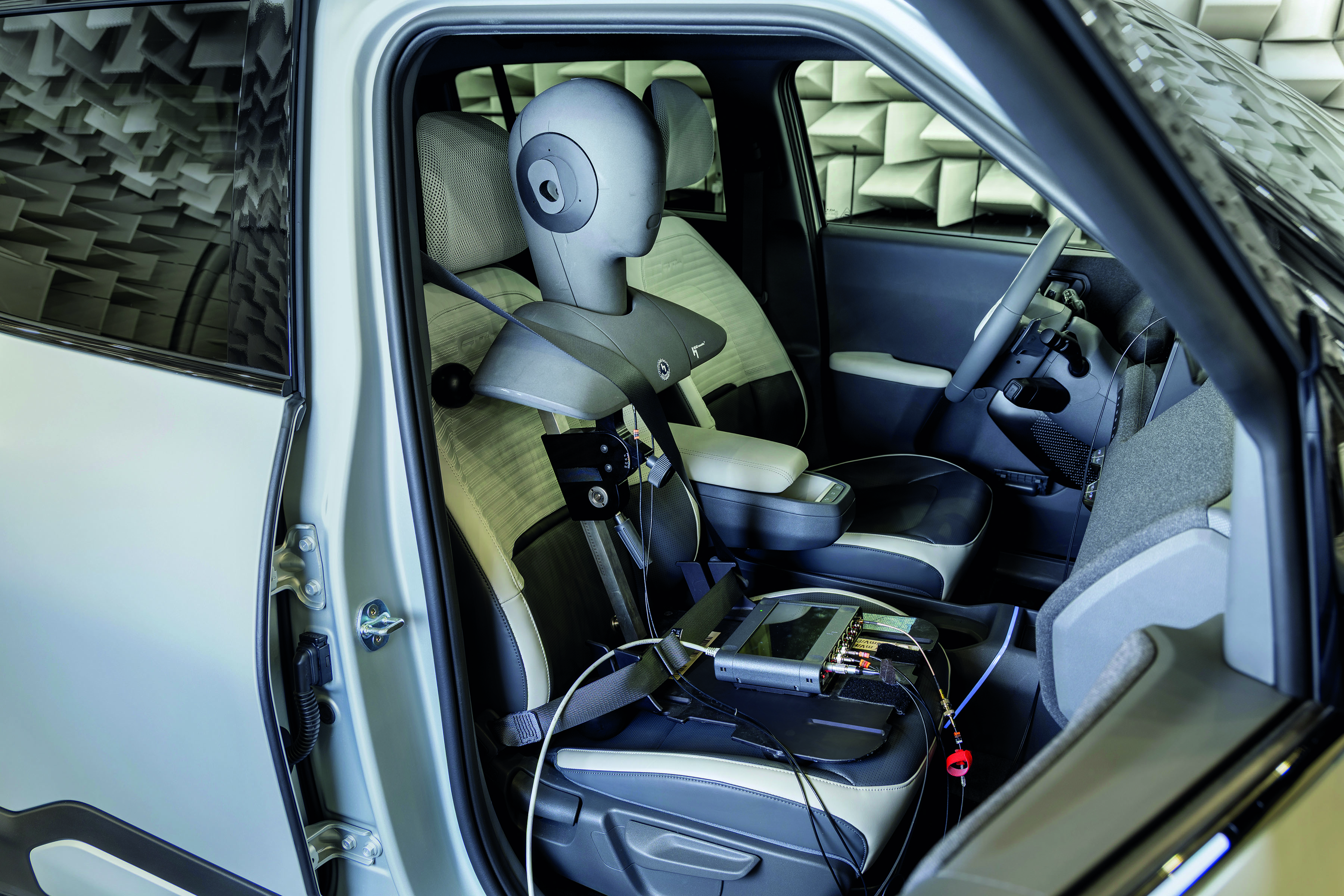
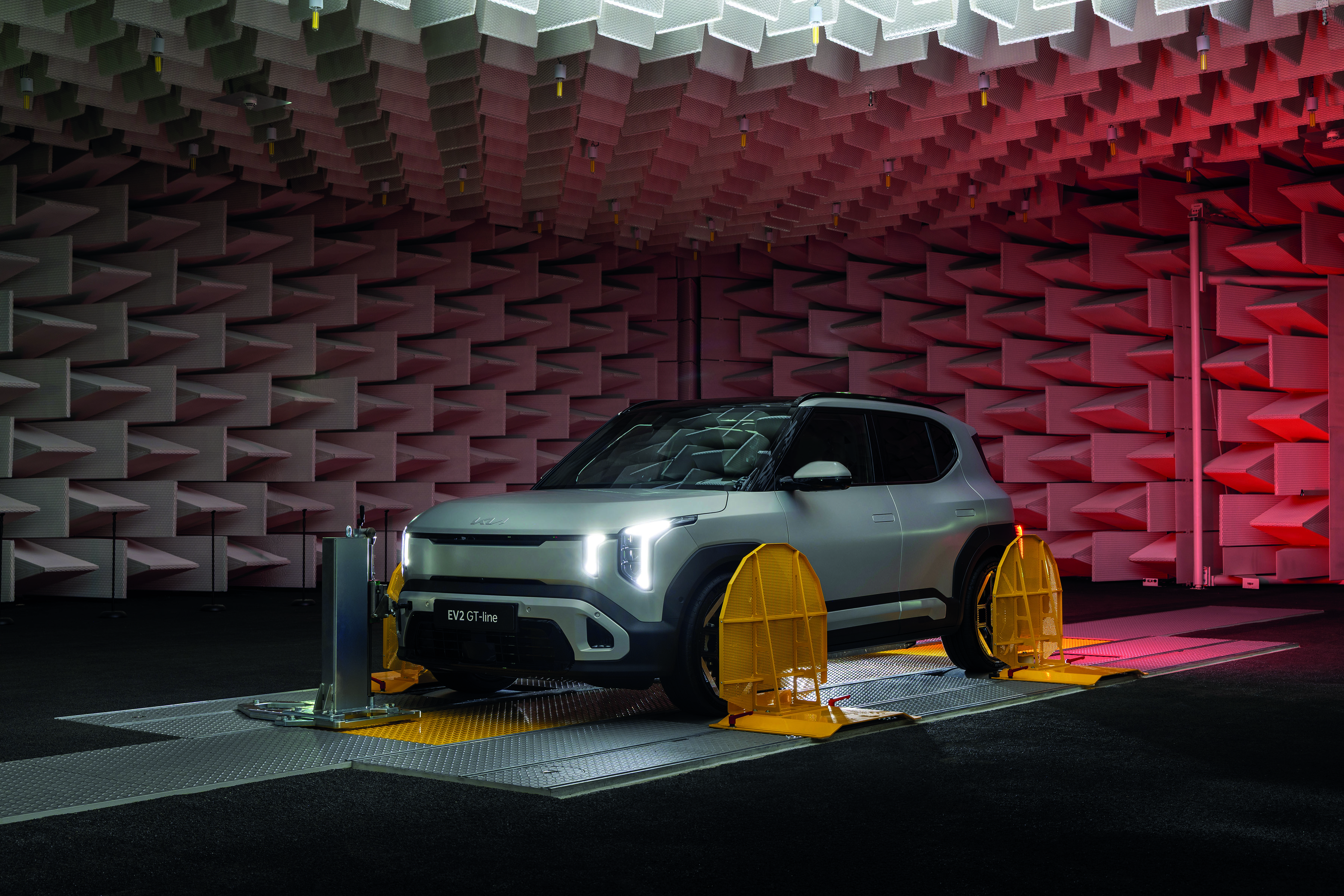
Kia said it has placed Noise, Vibration, and Harshness (NVH) at the core of the new Kia EV2 development. Designed and engineered specifically for the European market, the model is being positioned as a high-refinement entry into the compact electric vehicle segment—a category where cost-cutting usually results in significant cabin noise.
The EV Masking Dilemma
In traditional internal combustion engine (ICE) vehicles, the engine itself provides a constant hum that masks secondary sounds. Kia stated that without a petrol or diesel engine, road, wind, and high-frequency electronic sounds become the primary focus for occupants.
According to Pablo Martínez Masip, Vice President Product at Kia Europe, the removal of engine noise forces customers to notice small vibrations and high-frequency sounds that were previously hidden. Kia’s goal is to ensure the EV2 remains consistent and controlled, though the effectiveness of these measures remains to be seen in real-world conditions.
Technical Claims: Engineering for Silence
The Hyundai Motor Europe Technical Centre (HMETC) relied heavily on numerical simulations and dyno-based testing to build the EV2’s acoustic profile. By isolating specific frequencies in a lab, engineers attempted to eliminate variables like weather and road surface during the design phase.
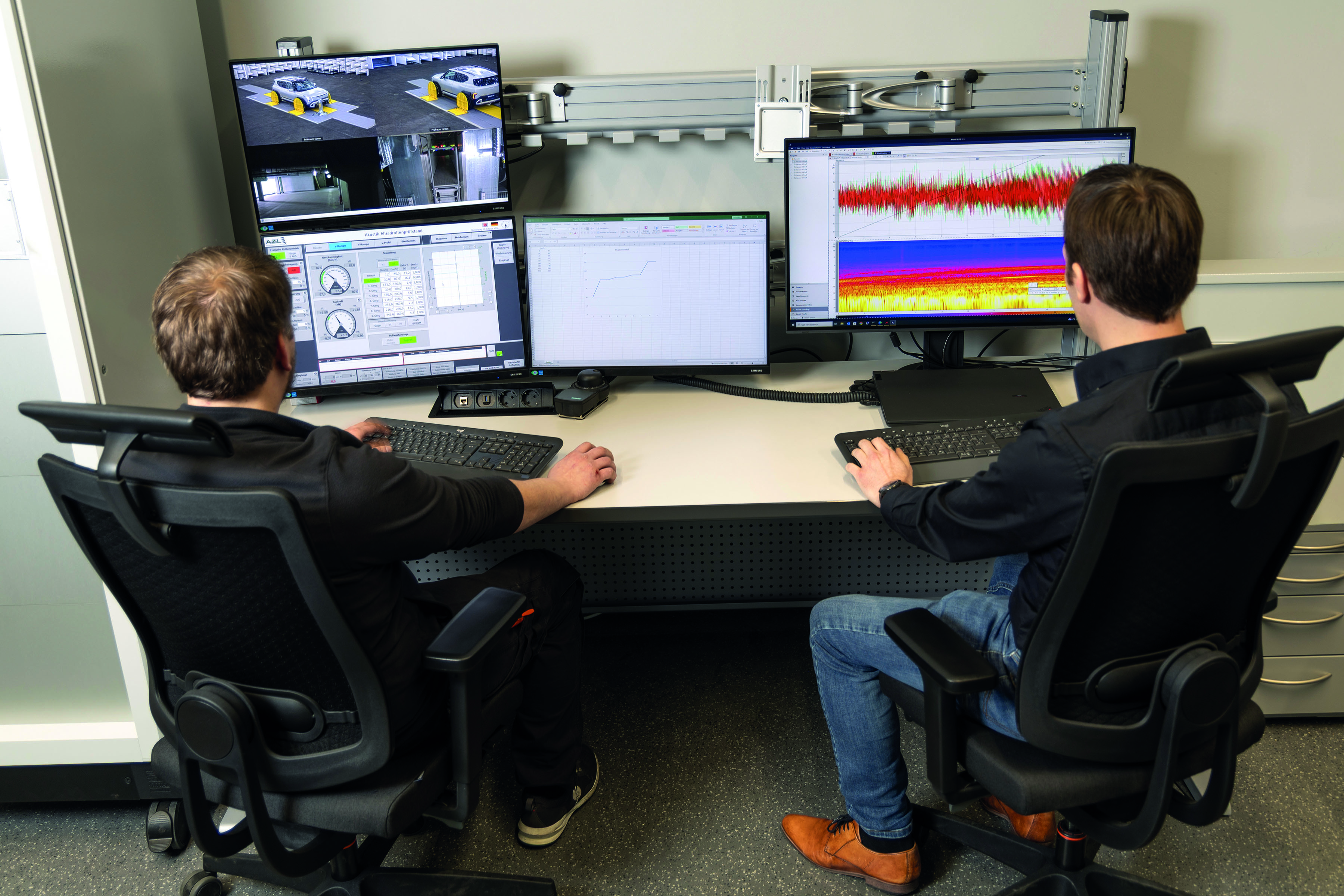
Lead Engineer Oliver Jung described the approach as a “system,” utilizing a combination of:
- Acoustic Glass: Specifically developed windscreens and door glass to mitigate wind turbulence.
- Specialized Tyres: Designed to reduce the “drone” common in EVs on coarse asphalt.
- High-Frequency Insulation: A “dash inner” insulation concept and a dedicated absorber for the front trunk (frunk) to dampen inverter and DC/DC converter noise.
The Hardware: Kia’s Refinement Package
| Feature | Claimed Benefit |
| Acoustic Tyres | Reduction of tonal intrusion from road contact. |
| Wheel Arch Absorbers | Lowering perceived sound levels within the wheel wells. |
| Acoustic Glazing | Limiting air turbulence noise at motorway speeds (110–130 km/h). |
| Underbody Covers | Optimized airflow and high-frequency sound transmission reduction. |
Verdict: Theory vs. Reality
While Kia stated that the EV2 “behaves calm at higher speed,” these technical solutions are, on paper, an attempt to bring premium-segment refinement to a budget-friendly platform. However, the compact segment is notoriously difficult for NVH; light-weight materials and cost-effective suspension setups often struggle to stay quiet on the varied, pockmarked road surfaces of Europe.
Furthermore, “tuned” safety sounds—such as the Intelligent Speed Limit Assist (ISLA)—are often cited by drivers as more intrusive than helpful. Whether Kia has truly balanced safety guidance with cabin peace is a question that can only be answered through rigorous independent testing.
We will reserve final judgment on whether the EV2 delivers on these “refined” promises until we can conduct our own decibel-meter tests and long-distance motorway trials.