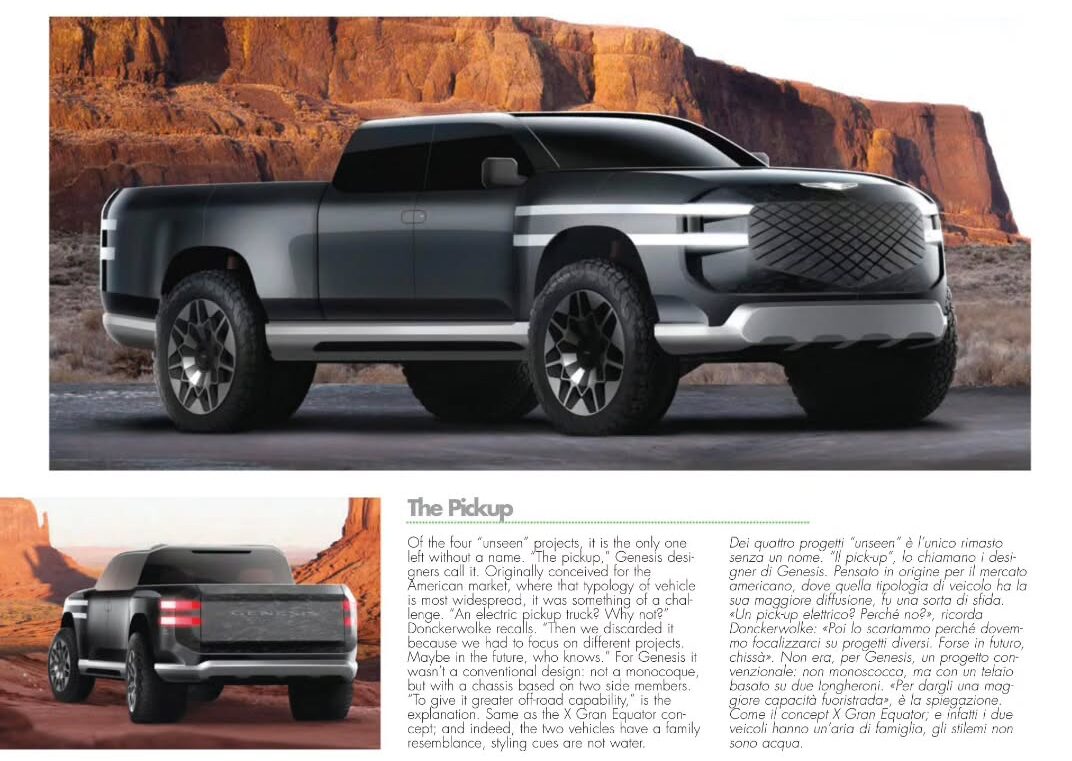
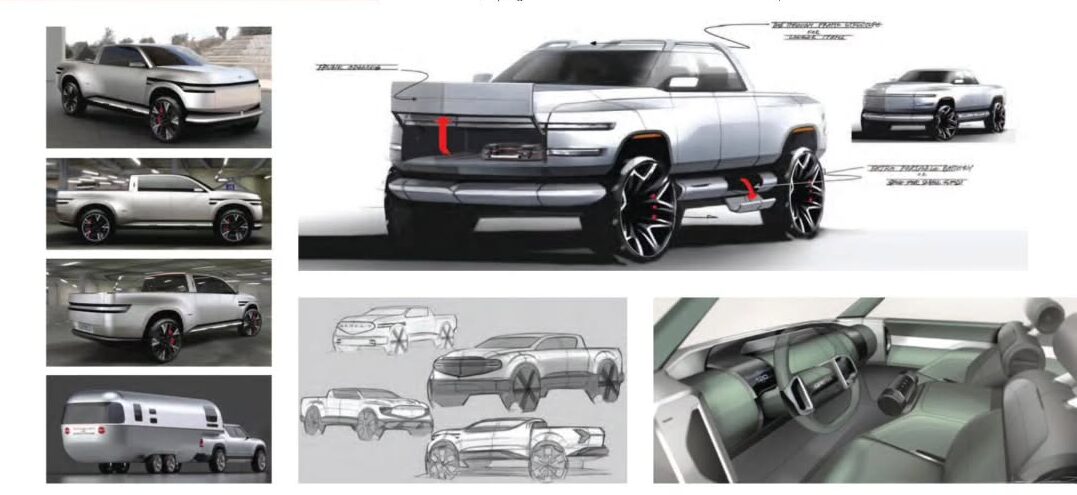
Genesis, Hyundai Motor Group’s luxury brand, has quietly explored a bold and unconventional idea: a Genesis electric pickup truck. Revealed through sketches and designer insights rather than an official concept reveal, this project stands out as one of Genesis’ most intriguing “unseen” design studies, according to a behind-the-scenes article by Auto&Design. Thank you again @ahhoang_cdn for the materials.
Unlike other experimental projects from the brand, the Genesis electric pickup never received an official name, underscoring its status as a pure design and engineering exploration rather than a confirmed production model.
A Genesis Electric Pickup Designed for the American Market
From the outset, the electric pickup was conceived primarily for the American market, where pickups dominate both sales charts and cultural identity. For Genesis designers, this made the project both logical and challenging.
“An electric pickup? Why not?” recalls Genesis Chief Creative Officer Luc Donckerwolke, highlighting the brand’s willingness to question traditional luxury vehicle boundaries. However, despite early enthusiasm, the project was ultimately paused as Genesis shifted its focus toward other strategic priorities.
Still, Donckerwolke leaves the door open: “Maybe in the future, who knows.”
Not a Conventional Genesis Design
What makes the Genesis electric pickup concept especially notable is its engineering philosophy, which diverges sharply from the brand’s usual luxury sedan and SUV platforms.
Unlike Genesis’ monocoque-based vehicles, this electric pickup was envisioned with:
- A body-on-frame architecture
- A chassis built on two longitudinal side members
- Enhanced off-road capability as a core objective
This approach aligns more closely with traditional pickup truck engineering, prioritizing durability and terrain capability over on-road refinement alone.
Strong Family Resemblance to the X Gran Equator Concept
According to Auto&Design, the electric pickup shares a clear visual and conceptual link with the Genesis X Gran Equator concept. The two vehicles exhibit a strong family resemblance, both in proportion and styling philosophy.
Key shared design cues include:
- A bold, upright stance emphasizing capability
- Clean, architectural surfaces rather than decorative complexity
- A focus on rugged elegance rather than utilitarian minimalism
The similarities suggest that Genesis views off-road-oriented electric vehicles as a potential future design direction, even if individual projects are shelved.
Why the Genesis Electric Pickup Was Put on Hold
Despite its innovative nature, the Genesis electric pickup concept was discarded before reaching prototype stage. The reason was not a lack of conviction, but rather resource prioritization.
At the time, Genesis needed to concentrate on:
- Expanding its global lineup
- Establishing its electric sedan and SUV identity
- Strengthening its presence in key luxury markets
As a result, the electric pickup remained a design exercise rather than a production commitment.
Could a Genesis Electric Pickup Still Happen?
While there is no official confirmation of a future Genesis electric truck, the existence of this design study is significant. It demonstrates that Genesis has already explored:
- Electric pickup packaging challenges
- Luxury-focused off-road design language
- Alternative chassis solutions beyond monocoque platforms
As electric pickups gain momentum globally, especially in North America, this abandoned concept could serve as a foundation for a future Genesis electric truck.
Conclusion
The Genesis electric pickup concept, revealed through sketches and insider commentary from Auto&Design, offers a rare glimpse into the brand’s experimental side. Though unnamed and unrealized, it reflects Genesis’ willingness to challenge conventions, blend luxury with rugged capability, and rethink what an electric vehicle can be.
Whether this project remains a footnote in Genesis design history or resurfaces as a production model in the future remains an open question—but its influence is already visible in the brand’s evolving design language.