
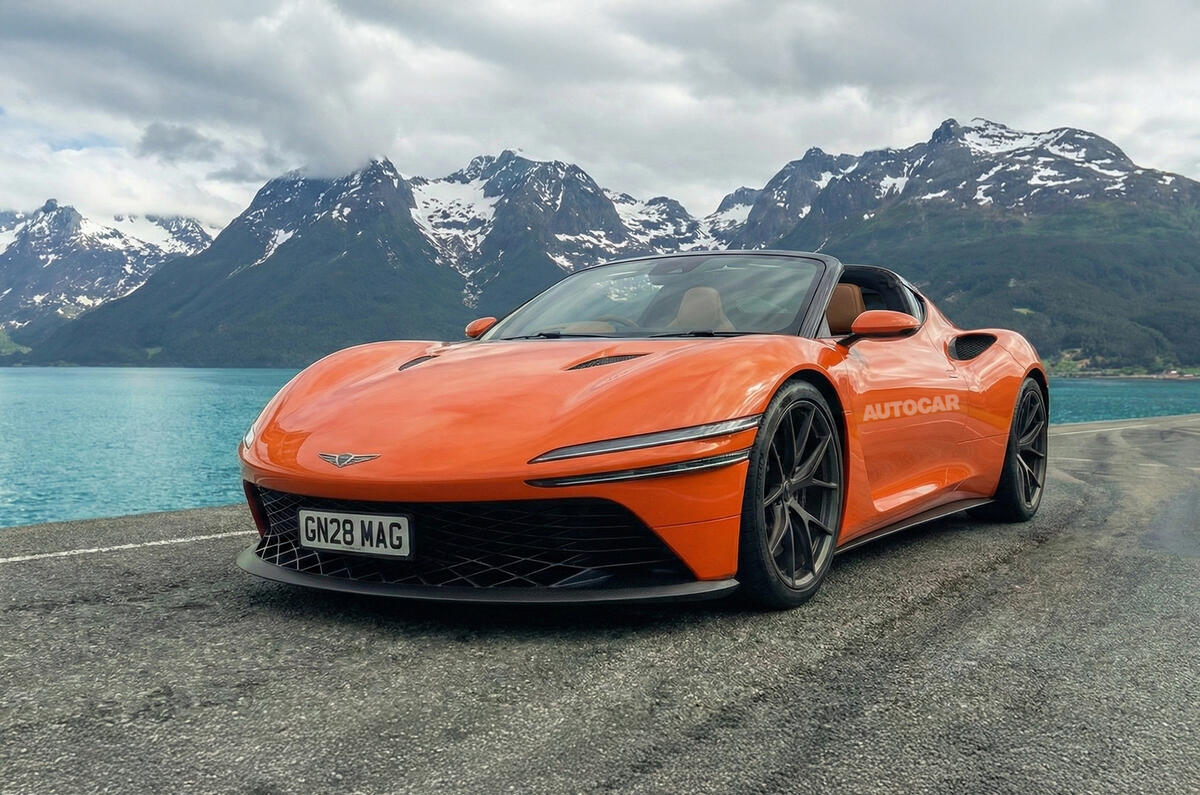
Genesis has confirmed that its forthcoming mid-engined Magma GT will form the foundation of a full family of high-performance variants, including a drop-top roadster, lightweight track-focused models, and a hardcore GT3 road car. Unveiled recently in concept form, this new vehicle is positioned as a future rival to established performance icons such as the Porsche 911 and McLaren 720S. The production version is expected to arrive later this decade, serving not only as Genesis’s flagship performance road car but also as the basis for the brand’s first GT3 race car.
Genesis Plans More Than Minimum GT3 Homologation Numbers
Under GT3 regulations, manufacturers are required to produce just 250 road-legal examples to homologate a race car. However, Genesis has no intention of limiting production to the bare minimum.
Genesis creative director Luc Donckerwolke confirmed that the company is planning a substantially larger production run, signaling long-term commitment to the Magma GT platform.
“This is a complete life cycle of products,” Donckerwolke explained, emphasizing that the concept shown so far represents only the entry point to the range.
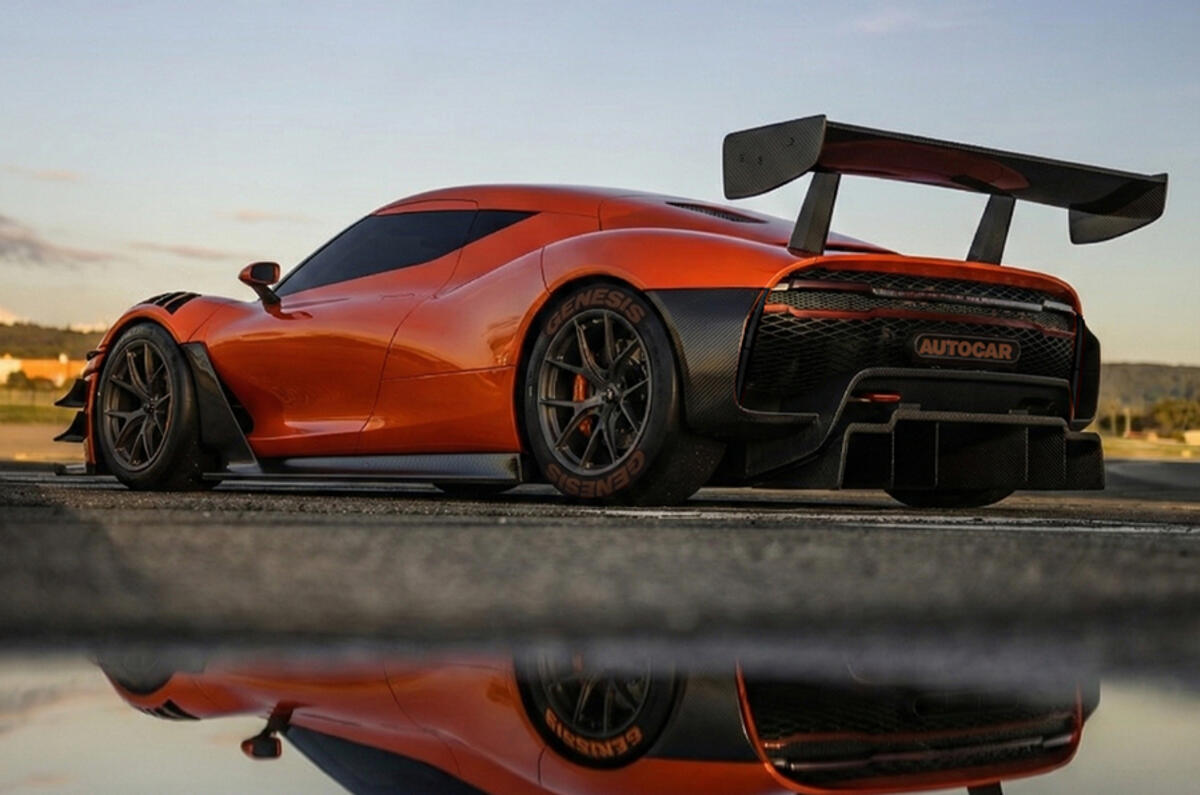
Magma GT Will Be a Dedicated Performance Halo Model
Unlike other Genesis vehicles, the Magma GT will be exclusively offered as a Magma performance model, making it the most focused and extreme car the luxury brand has ever produced.
“The version you’ve seen so far is the base model,” Donckerwolke revealed.
Genesis plans to expand the lineup with a wide variety of derivatives designed to appeal to different types of performance buyers while maintaining the brand’s luxury DNA.
Confirmed Genesis Magma GT Variants Include:
- Magma GT S
- Magma GT GTS
- Magma GT Roadster
- Lightweight version
- Club Sport variant
- GT3 road car
- GT3 R track-only race car
According to Donckerwolke, each version will blend high performance with refined luxury interiors, ensuring the Magma GT remains unmistakably Genesis despite its motorsport ambitions.
Engine Choice Still Under Evaluation
The Magma GT concept is known to have been powered by a V8 engine, but Genesis has not yet finalized the production powertrain.
Donckerwolke stated that the final decision will be influenced by:
- Customer demand
- Technical requirements of the GT3 racing class
This leaves the door open for multiple powertrain possibilities as Genesis balances road-car appeal with racing compliance.
Inspired by the Porsche 911, But Not a Direct Rival
While the multi-variant strategy naturally invites comparisons to the Porsche 911’s long-standing model lifecycle, Genesis is keen to differentiate its approach.
Donckerwolke acknowledged inspiration from what he described as “clever life-cycle management”, but stressed that the Magma GT is not conceived as a direct competitor.
“Our design and engineering will be completely different,” he said. “Applying the Genesis recipe of refinement and athletic performance will give it special positioning.”
Genesis Aims to Forge Its Own Performance Identity
Hyundai Motor Group’s chief technology officer Manfred Harrer, who previously worked on the Porsche 911 program, reinforced this philosophy.
“We cannot go up against such an icon,” Harrer said. “We have to find our own way.”
This statement underscores Genesis’s broader ambition: rather than copying established European supercars, the brand aims to create a distinctly Korean interpretation of luxury performance, blending motorsport credibility with design sophistication.
Genesis Magma GT: A New Era for the Brand
With a full spectrum of variants planned and GT3 racing on the horizon, the Genesis Magma GT represents a major turning point for the brand. It will serve as a halo performance model, a motorsport homologation special, and a statement of Genesis’s long-term intent in the global high-performance market.
News and Rendering Source: Autocar