Hyundai Motor Company has officially begun development of an AI-driven vehicle (ADV) or AI Vehicle, marking a major step toward next-generation mobility powered by artificial intelligence, according to a report from ETNews. The automaker is targeting commercialization and mass production by 2028, positioning the project as a key strategy to compete with global leaders such as Tesla and BYD.
What Is an AI-Driven Vehicle (ADV)?
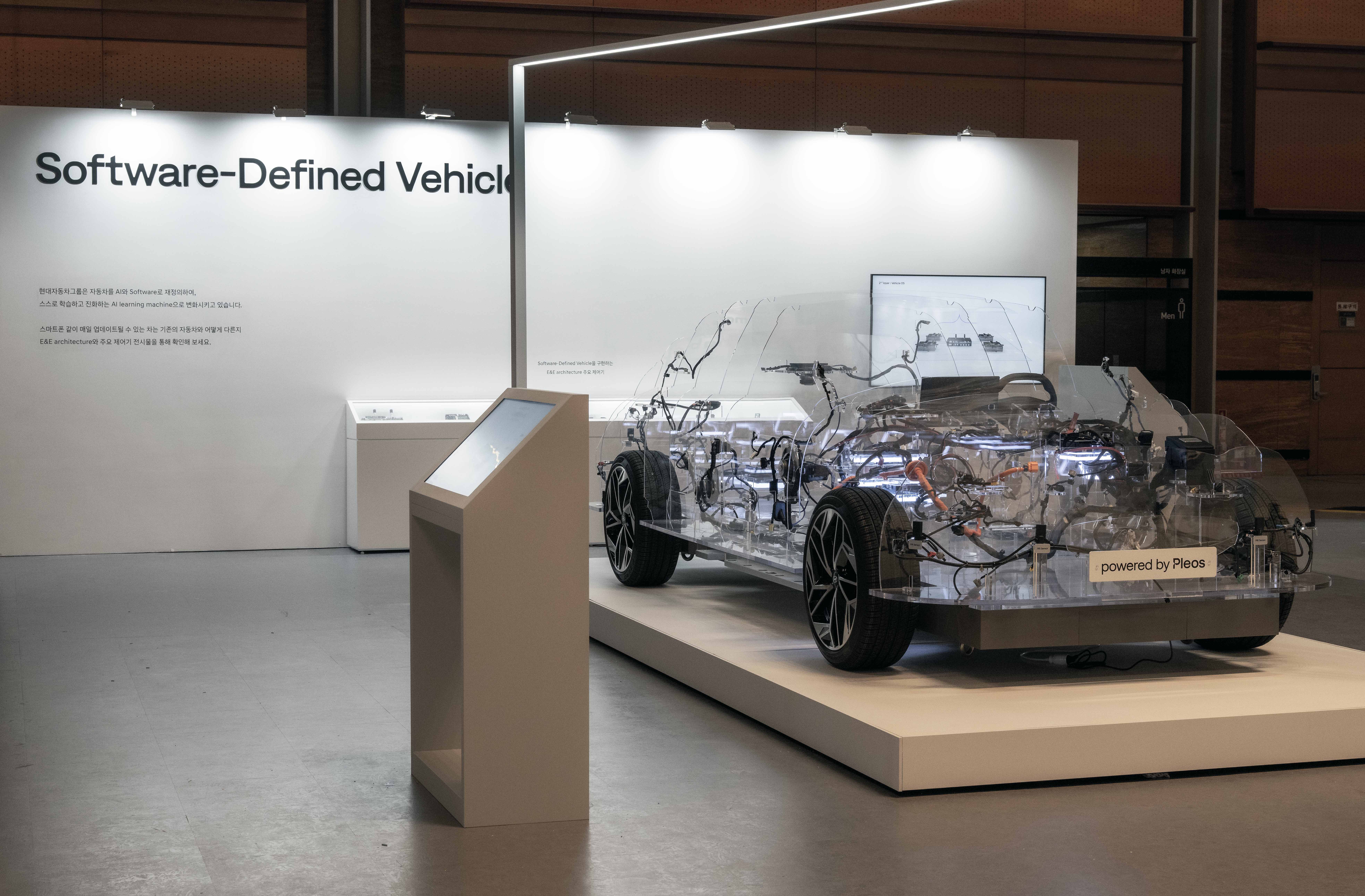
The ADV (AI Driven Vehicle) concept goes beyond the current Software-Defined Vehicle (SDV) architecture. While SDVs rely primarily on software to control vehicle functions, ADVs place artificial intelligence at the center of vehicle control, decision-making, and management.
Hyundai’s ADV will integrate domestically developed AI autonomous driving models, enabling vehicles to operate with minimal or no driver intervention. The goal is to achieve fully unmanned autonomous driving using in-house AI technology.
Strategic Partnerships Powering Hyundai’s AI Car Vision
Hyundai Motor is collaborating with major technology and mobility companies to build a comprehensive AI vehicle ecosystem:
- LG Electronics, Hyundai Mobis, and HL Mando: Joint development of the ADV platform, combining vehicle architecture, electronics, and software. The core platform is expected to be completed by 2027.
- HL Klemove and Kakao Mobility: Development of an AI autonomous driving model optimized for road and traffic conditions, scheduled for integration into SDVs by 2027.
- Naver: Collaboration on AI infrastructure, AI agents, and data-driven mobility services to expand future mobility applications.
This AI autonomous driving model is designed to make optimal real-time decisions based on driving environments, significantly improving autonomous performance and safety.
Competing With Global AI and EV Leaders
Hyundai Motor aims to close the technology gap with global automakers by developing in-house AI capabilities rather than relying on external solutions. The AI autonomous driving model is expected to become a core pillar of Hyundai’s ADV ecosystem, strengthening its position in the global AI mobility market.
Long-Term Roadmap: 2028 to 2030
Hyundai plans to:
- Begin ADV mass production in 2028
- Expand ADV adoption across vehicle lineups by 2030
- Build a globally competitive AI mobility ecosystem
- In parallel, Hyundai Motor Group is advancing robotaxi and robotics projects through affiliates such as Motional and Boston Dynamics, further reinforcing its AI-driven future.
Hyundai Chairman’s Vision for AI Leadership
Hyundai Motor Group Executive Chairman Chung Euisun highlighted the strategic importance of AI in his 2026 New Year’s address, stating that true global leadership requires internalizing AI as a core organizational capability, rather than outsourcing it.
Conclusion
With its AI-driven vehicle initiative, Hyundai Motor is making a decisive move toward AI-centric mobility, aiming to redefine autonomous driving and secure long-term competitiveness in the global automotive industry.