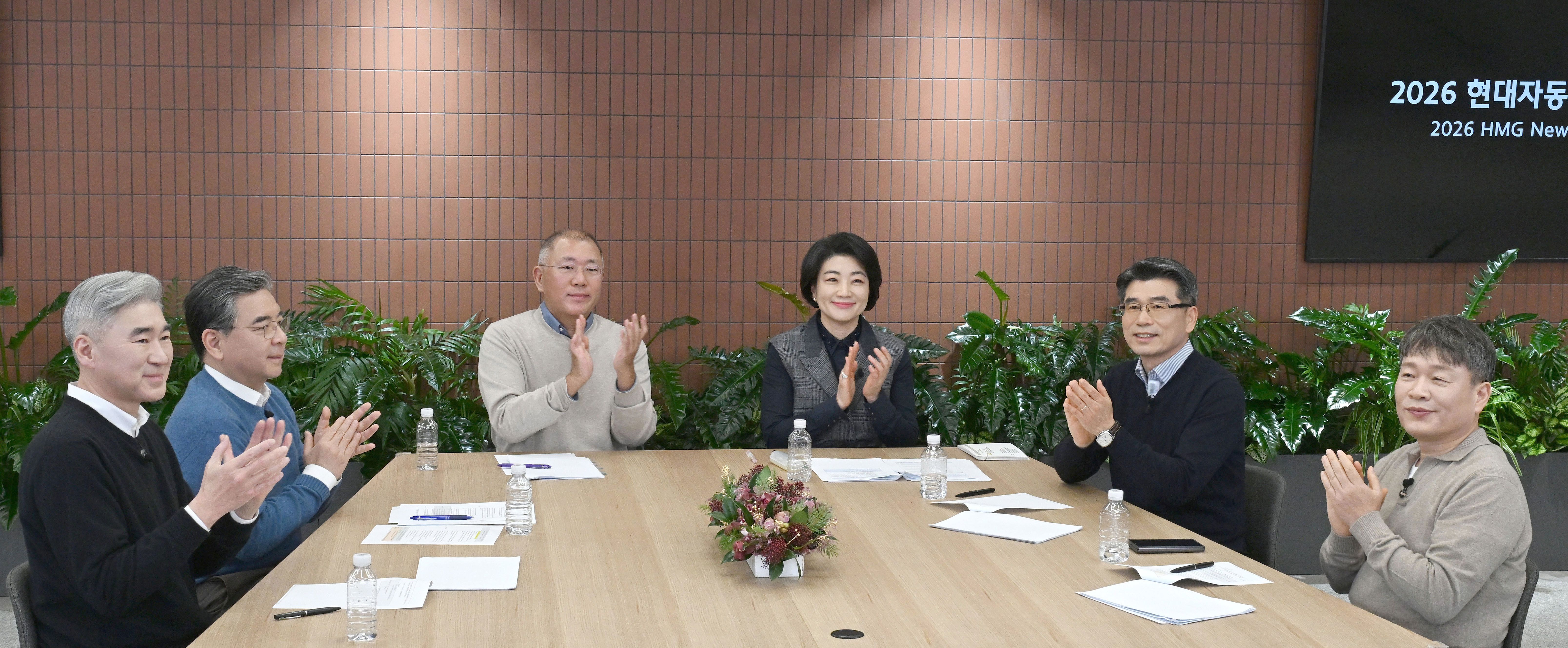
Hyundai Motor Group has officially unveiled its 2026 strategic vision, outlining a bold roadmap centered on customer-focused transformation, AI-driven innovation, and strengthened ecosystem competitiveness. The vision was shared with global employees during a New Year address led by Executive Chair Euisun Chung, positioning the Group to navigate rapidly evolving global market dynamics while setting new industry standards.
As the automotive and manufacturing industries undergo profound transformation driven by artificial intelligence, digitalization, and sustainability, Hyundai Motor Group is reinforcing its role as a future-ready global leader.
Five Strategic Priorities to Navigate a Changing Global Landscape
During his remarks, Executive Chair Chung presented five key strategic priorities that will guide Hyundai Motor Group through 2026 and beyond:
- Customer-focused evolution
- Agile decision-making
- Ecosystem competitiveness
- Bold collaboration
- Leadership in new industry standards
These priorities reflect the Group’s commitment to continuous transformation in response to technological disruption, shifting customer expectations, and intensifying global competition.
Driving Transformation Through Customer Focus
Executive Chair Chung opened his address by expressing gratitude to employees and customers, acknowledging the unprecedented challenges of 2025 and thanking employees for their dedication and customers for their continued trust.
He emphasized that customer insight must remain the foundation of transformation, especially during periods of economic uncertainty and fierce competition.
“When conditions get tough and competition fierce, our greatest strength will be our ability to continuously evolve by staying close to our customers,” Chung stated.
He encouraged employees to critically assess product planning and development by asking fundamental questions:
- Are customer perspectives fully reflected?
- Were compromises made during development?
- Can product quality be confidently presented to customers?
By fostering this mindset, Hyundai Motor Group aims to build resilience and maintain long-term competitiveness.
Agile Decision-Making Through Direct Leadership Engagement
Transformation, according to Chung, must also extend to leadership and organizational culture. He emphasized that leaders must engage directly with teams and operations, gaining firsthand understanding of real-world challenges.
“Fast and clear communication, and agile decision-making free from formality, are what matter most,” he said.
This approach is designed to enhance speed, clarity, and innovation, enabling the Group to adapt more effectively to fast-moving global conditions.
Building Competitive Advantage Through a Strong Ecosystem
Hyundai Motor Group’s competitiveness depends heavily on the strength of its global supply and production ecosystem. With products such as vehicles and humanoid robots composed of tens of thousands of components, quality and performance must be consistent across the entire value chain.
“The strength of our supply ecosystem directly amplifies our competitive advantage,” Chung noted.
The Group views ecosystem health as essential for sustainable growth, emphasizing collaboration and shared success across partners and suppliers.
Bold Collaboration for AI-Driven Transformation
As artificial intelligence reshapes the global manufacturing landscape, Hyundai Motor Group is accelerating its AI-driven transformation through bold collaboration with diverse partners.
Executive Chair Chung highlighted that AI is now a core determinant of product competitiveness, particularly in the automotive sector. He emphasized the Group’s unique strengths, including:
- World-class manufacturing and design capabilities
- Rich data from vehicles, robots, and production facilities
- Real-world user experience insights
“We possess world-class capabilities in the design and manufacturing of physical products,” Chung said, expressing strong confidence in the Group’s leadership in physical AI.
By expanding its industrial ecosystem and partnerships, Hyundai Motor Group aims to deliver greater customer value and redefine mobility standards.
Executive Roundtable Highlights AI Integration and Future Readiness
Following Chung’s address, an executive roundtable discussion brought together senior leaders from across Hyundai Motor Group, including:
- Vice Chair Jaehoon Chang
- Hyundai Motor Company CEO José Muñoz
- Kia CEO Ho Sung Song
- Hyundai Mobis CEO Gyu Suk Lee
- Presidents Luc Donckerwolke, Sung Kim, and Manfred Harrer
The discussion, informed by feedback from more than 7,200 employees globally, focused on organizational culture, AI integration, and strategic execution.
AI as the Engine of Organizational Evolution
Executive Chair Chung emphasized that AI is not merely a tool but a transformative force capable of defining problems and creating new knowledge.
“Our future hinges on whether we treat AI as a tool or adopt it as the engine of organizational evolution,” he said.
He stressed that embedding AI into the Group’s organizational DNA is critical to sustaining global leadership, especially as momentum shifts toward physical AI.
Advancing Software-Defined Vehicles, Robotics, and Hydrogen Leadership
Software-Defined Vehicles (SDV)
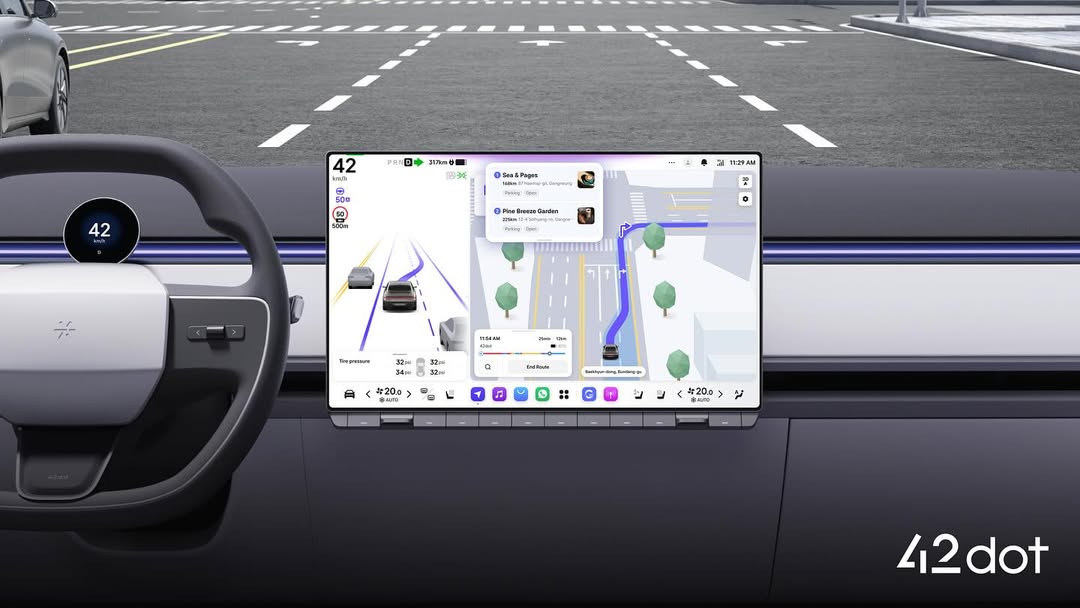
Vice Chair Jaehoon Chang reaffirmed Hyundai Motor Group’s commitment to becoming a software-driven mobility company, noting significant progress in SDV development.
He highlighted the ongoing collaboration with 42dot, stating that SDV deployment across various vehicle models is proceeding as planned.
Robotics and Physical AI
Chang also outlined advancements in robotics through collaboration with Boston Dynamics, including:
- Stretch, the logistics robot
- Spot, the quadruped robot
- Atlas, the humanoid robot
These robots are already collecting real-world data to improve performance, safety, and cost efficiency. Atlas, in particular, is expected to reduce human exposure to hazardous environments and repetitive tasks.
Hydrogen Value Chain Leadership
Hyundai Motor Group continues to lead the hydrogen value chain, from production and storage to mobility and industrial applications.
“Hydrogen serves as both an energy carrier and storage solution that complements renewable energy,” Chang said, noting growing global recognition of the Group’s achievements.
Business Leaders Outline Growth and Technology Strategies
- José Muñoz, CEO of Hyundai Motor Company, highlighted localization strategies to mitigate tariff impacts while strengthening competitive advantages.
- Ho Sung Song, CEO of Kia, announced ambitious growth targets exceeding 6%, driven by PBV expansion and new SUV launches such as the Kia Telluride and Seltos.
- Gyu Suk Lee, CEO of Hyundai Mobis, emphasized its role in supporting SDV architecture and mass production.
- Sung Kim, President and Head of Strategy, stressed proactive global risk management.
- Manfred Harrer, Head of R&D, confirmed progress on the “SDV Pace Car” for next-generation models.
- Hae In Kim, Head of Corporate HR, highlighted collaboration, resilience, and diversity as drivers of momentum.
- Luc Donckerwolke, Chief Creative Officer, encouraged bold innovation and disruption.
Leading New Industry Standards
Concluding the session, Executive Chair Chung urged employees to lead the creation of new industry and product standards, emphasizing Hyundai Motor Group’s role in shaping the future of mobility.
Quoting Founding Chairman Ju-yung Chung, he reinforced the spirit of perseverance and innovation that defines the Group’s identity.
“If there is no path, find one. If you cannot find one, make one.”
He closed with a message of confidence and unity, crediting both employees and customers as the driving force behind Hyundai Motor Group’s continued evolution.
Final Thoughts
With its 2026 strategic vision, Hyundai Motor Group is positioning itself at the forefront of AI-powered mobility, ecosystem-driven growth, and customer-centric innovation. By embedding AI into its organizational DNA, strengthening collaboration, and leading new industry standards, the Group is charting a clear path toward sustainable global leadership.