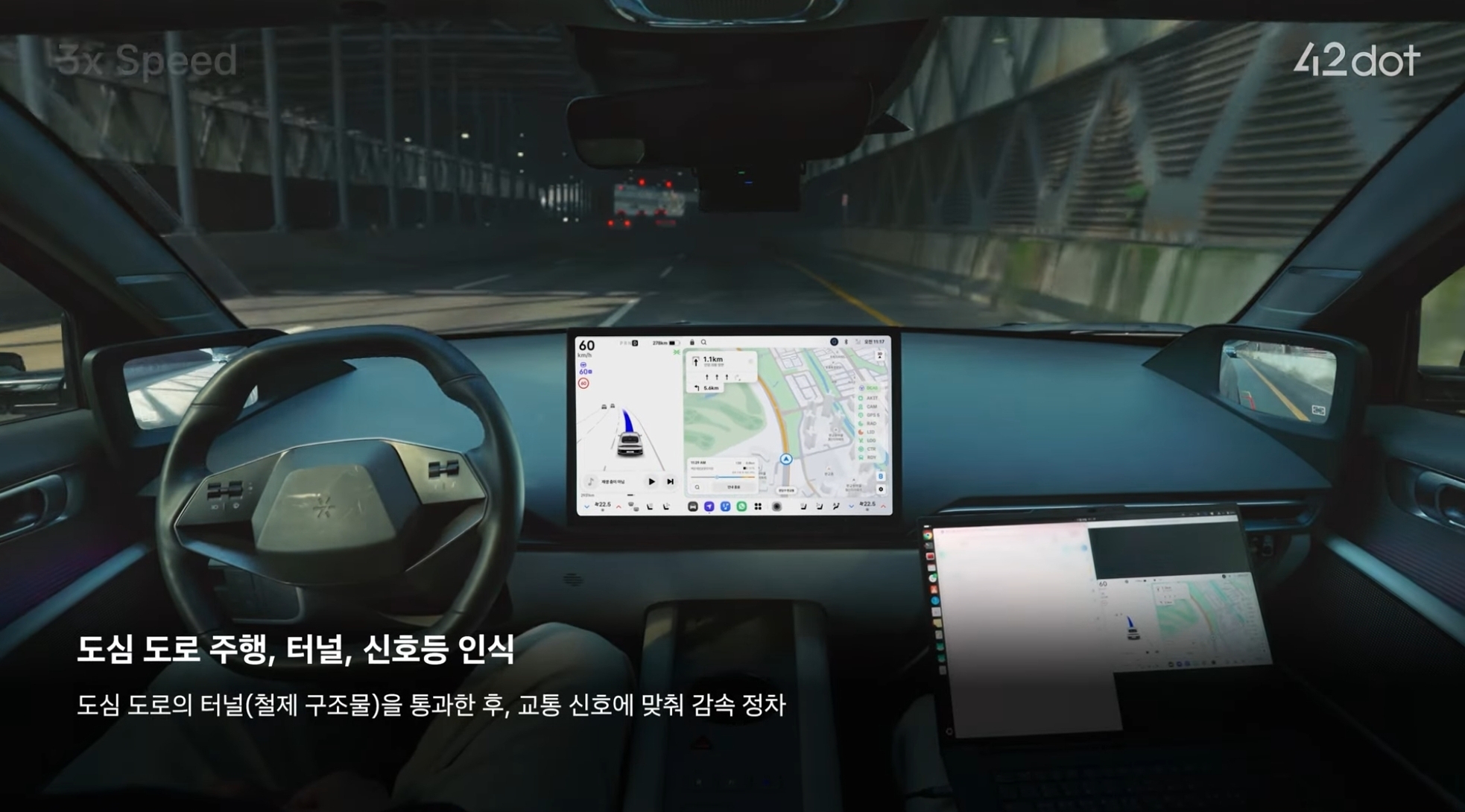
Hyundai Motor Group’s mobility startup 42dot has released a rare and highly anticipated showcase of its end-to-end (E2E) autonomous driving technology. The company published new footage of its Atria AI test vehicle demonstrating real-world autonomous driving and parking—its first public technical update in more than two years. The timing is drawing significant attention, as the release came shortly after the resignation of Song Chang-hyun, head of Hyundai Motor Group’s AVP division and former CEO of 42dot.
A Surprise Reveal After Years of Secrecy
42dot posted two new videos on its official website and YouTube channel, capturing autonomous driving and autonomous parking scenarios in actual traffic environments. The disclosure has surprised many in the industry because 42dot has maintained an unusually strict policy of keeping its autonomous driving research under wraps.
This marks the first content update since August 2023, ending an extended period of silence that had left many observers speculating about the project’s status.
Strong Market Response and Rising Curiosity
The reaction to the new Atria AI demonstration has been swift and enthusiastic. By the morning of the 8th, the primary autonomous driving video had exceeded 58,000 views and attracted more than 860 comments. The sudden surge of attention highlights the market’s curiosity about Hyundai Motor Group’s progress in the competitive autonomous driving landscape.
Atria AI Executes Real-World Autonomous Maneuvers
The released footage features the Atria AI test vehicle navigating complex urban conditions. Key capabilities shown in the video include:
- Driving on city streets with complete hands-off operation
- Recognizing tunnels, traffic lights, and surrounding conditions through camera-only perception
- Turning left at intersections and performing smooth lane changes
- Executing autonomous parking based on previous visit history
This real-world demonstration places emphasis on the practicality and maturity of the technology, rather than controlled-lab conditions.
End-to-End Autonomous Driving Without HD Maps
In its video description, 42dot explains that Atria AI is built around a fully end-to-end autonomous driving model. Unlike approaches that depend heavily on high-definition maps, Atria AI relies solely on eight onboard cameras to recognize its environment and make driving decisions.
The company highlights several core technologies powering the demonstration:
- Camera-optimized perception system
- End-to-end autonomous driving model (E2E Driving)
- High-performance AI compute using 400 TOPS-class NPUs
- NOA (Navigation on Autopilot) functionality for both highways and urban roads
42dot positions Atria AI as a leading example of the future direction of software-defined autonomous driving systems.
Not Connected to Internal Leadership Changes, Says 42dot
Industry speculation suggested the timing of the video release might relate to the recent departure of Song Chang-hyun. However, early assessments indicate that the update is likely part of 42dot’s long-term communication roadmap rather than a reactionary move.
How Atria AI Compares to Tesla and GM Technologies
While Hyundai Motor Group’s autonomous driving technology has evolved significantly, market comparisons remain intense. Tesla’s FSD (Full Self-Driving) and General Motors’ Super Cruise are still categorized as Level 2 partial automation systems, meaning drivers remain responsible for any incidents. Yet many consumers and analysts argue that the real-world performance of these systems still leads in the market.
The unveiling of Atria AI signals Hyundai Motor Group’s intent to close that gap by demonstrating stronger, map-independent, camera-based autonomy.