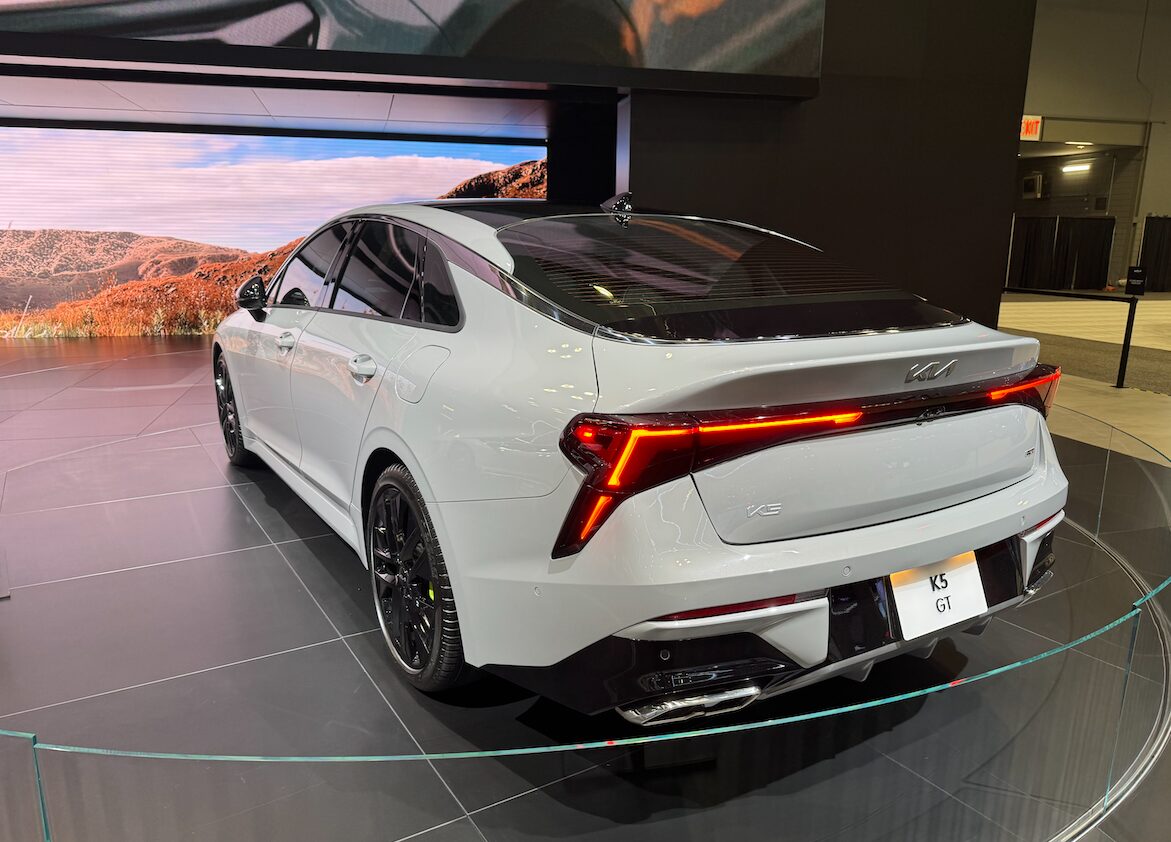
Kia is preparing to extend the life cycle of its flagship midsize sedan, the Kia K5, through an unusual second facelift (partial change), as global automakers recalibrate the pace of electrification. According to the auto parts industry, cited by ETNews, Kia has officially begun development of the K5 second partial change model (project name: DL3 PE2), with a target launch in the first half of 2027.
The upcoming new K5 will have an annual production target exceeding 80,000 units, signaling Kia’s strong confidence in sustained sedan demand despite the ongoing SUV and EV shift.
Kia K5 Expected to Remain on Sale Until At Least 2030
With the confirmation of the second facelift, the Kia K5 is now expected to remain in production until at least 2030. Rather than discontinuing the internal combustion engine (ICE) sedan prematurely, Kia aims to maximize marketability while minimizing development costs.
By applying two partial changes instead of a full-generation replacement, Kia can:
- Extend the K5’s product life cycle
- Avoid costly new ICE or hybrid platform investments
- Maintain competitiveness during a transitional electrification period
This strategy reflects a broader industry trend as automakers delay large-scale ICE platform overhauls while preparing for a post-2030 EV-dominant era.
Slower Global EV Adoption Strengthens ICE and Hybrid Demand
Although the long-term transition to 100% electric vehicles remains inevitable, global EV adoption has slowed, particularly in key markets such as the United States. As of last month:
- U.S. electric vehicle sales declined 58.9% year-on-year
- Hybrid vehicle sales surged 48.9%, reaching an all-time high
This shift has prompted Hyundai Motor Group, including Kia, to reorganize core product lines around hybrids rather than pure EVs, reinforcing the business case for extending models like the K5.
Diverse Powertrain Strategy: ICE, Hybrid, and Plug-in Hybrid
The new Kia K5 second facelift is expected to actively respond to diversified market demand by offering:
- Internal combustion engine (ICE) variants
- Hybrid powertrains
- Plug-in hybrid (PHEV) options
This multi-powertrain approach allows Kia to serve markets with varying emissions regulations and infrastructure readiness, while maintaining strong sales volumes.
Additionally, the updated K5 will feature Hyundai Motor Group’s next-generation operating system, Pleos OS, enhancing product competitiveness through:
- Improved infotainment performance
- Advanced software integration
- Updated in-vehicle technologies
15 Years of Kia K5: A Cornerstone of the Kia Sedan Lineup
2025 marks the 15th anniversary of the Kia K5, making it the longest-running model in Kia’s ‘K’ sedan series. Since its debut, the K5 has:
- Led the revival of Kia’s sedan lineup
- Established itself as a national midsize sedan in Korea
- Competed directly with the Hyundai Sonata
The current third-generation Kia K5 debuted in November 2019 and received its first facelift in November 2023. Despite being in its seventh year on the market, the model continues to demonstrate strong sales performance.
Kia K5 Maintains Strong Sales Despite SUV Dominance
Even as SUVs dominate global sales trends, the Kia K5 continues to perform steadily. In Korea alone, over 3,000 units are sold monthly, underscoring the enduring appeal of well-positioned midsize sedans.
This consistent demand further validates Kia’s decision to invest in a second partial change rather than ending the model prematurely.
Hyundai Sonata Will Receive a New Generation
With Kia confirming the K5’s second facelift and Hyundai announcing the introduction of a new generation of the Sonata, it appears that the plans to transition entirely to electric vehicles have been abandoned.. This suggests a broader Hyundai Motor Group strategy to extend the lifespan of key sedan models during the EV transition period.