The U.S. government has announced that tariffs on Korean-made automobiles will rise from 15% to 25%, a move that could significantly increase cost pressures across South Korea’s automotive industry. The tariff adjustment is expected to have a substantial financial impact on Hyundai Motor Company and Kia, potentially adding nearly 5 trillion won annually in combined expenses.
The announcement was made Tuesday via U.S. President Donald Trump’s social media account and applies not only to automobiles, but also to lumber, pharmaceuticals, and other reciprocal trade categories.
Rising Cost Burden for Hyundai Motor and Kia
Analysts estimate that the reinstated 25% tariff could saddle Hyundai Motor alone with more than 4 trillion won ($2.8 billion) in additional costs, at a time when the automaker is already facing slowing global electric vehicle demand and increased investment pressure abroad.
According to Meritz Securities, every 10-percentage-point increase in tariffs raises operating expenses by approximately:
- 3.1 trillion won for Hyundai Motor
- 2.2 trillion won for Kia
The same analysis projects that higher tariffs could reduce:
- Hyundai’s operating profit by 23%
- Kia’s operating profit by 21%
If fully implemented, the tariff increase would materially weaken profitability for both automakers, particularly on vehicles exported from South Korea to the U.S. market.
Limited Ability to Absorb the Shock
Industry experts warn that Hyundai and Kia may have limited room to cushion the impact this time.
“In previous periods of high tariffs, automakers were able to absorb some of the shock using inventory,” said Lee Hang-gu, a researcher at the Korea Automotive Technology Institute. “This time, inventories have already been depleted, making it more likely that the impact will be felt directly.”
Lee added that the 10-percentage-point tariff increase is roughly equivalent to the operating margins of automakers, meaning the cost could translate almost directly into reduced profitability rather than being offset internally.
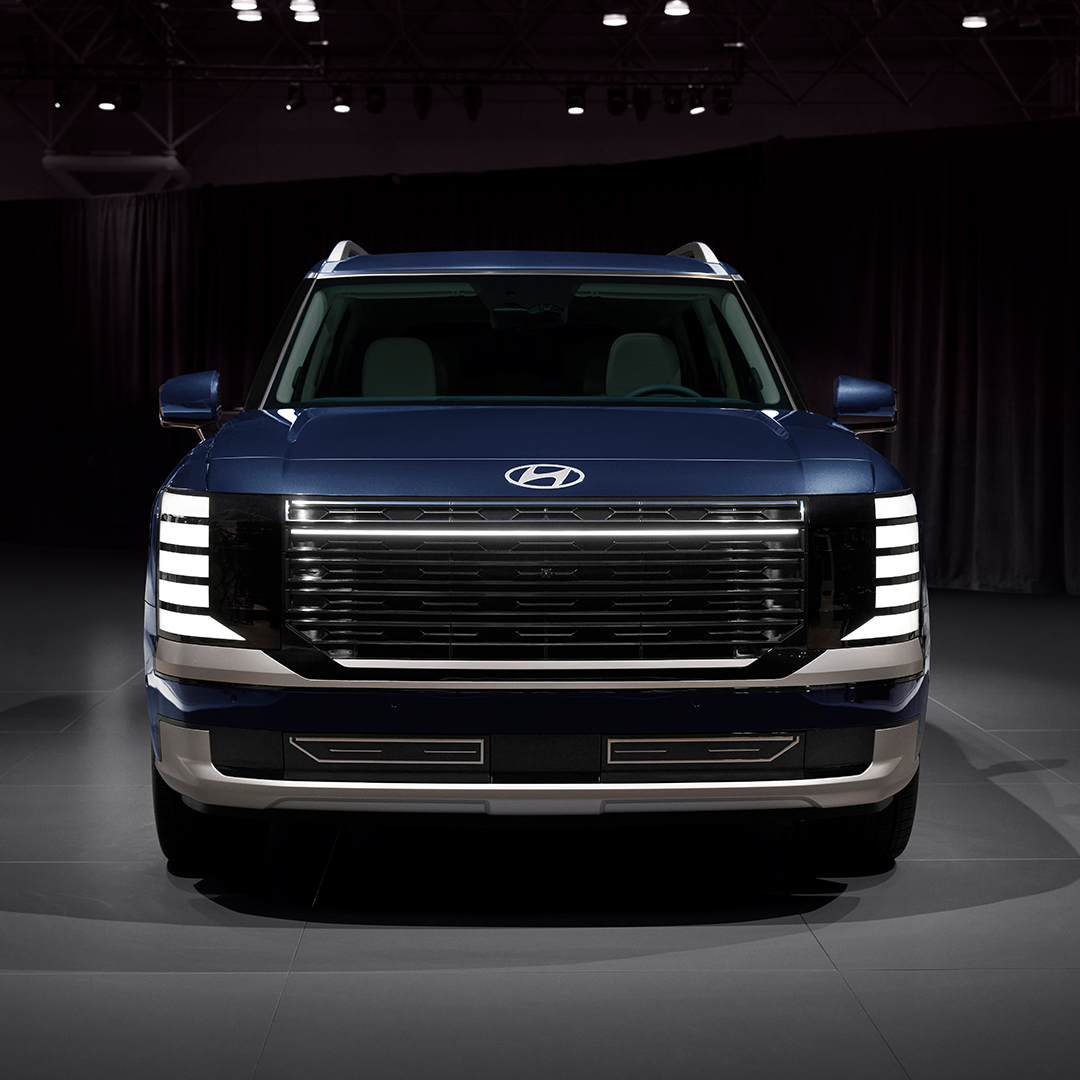
Will Hyundai relocate the Palisade production from Ulsan to the U.S. Metaplant?
Historical Precedent Highlights Financial Risk
The potential impact is underscored by recent history. After a 25% tariff was imposed in April last year, Hyundai and Kia recorded combined losses of 4.64 trillion won over the second and third quarters alone.
Including fourth-quarter results yet to be announced, full-year operating profit for 2025 is projected at 21.5 trillion won, representing a 20.1% decline year-on-year.
These figures highlight the sensitivity of South Korean automakers’ earnings to U.S. tariff levels.
Broader Impact on Korea’s Auto Industry
The tariff increase would also affect GM Korea, which exports around 90% of its production to the United States. Analysts warn that sustained higher tariffs could jeopardize the viability of GM Korea’s manufacturing operations, raising concerns about potential plant closures.
Vehicles awaiting export at ports such as Pyeongtaek in Gyeonggi Province underscore the scale of Korea’s reliance on the U.S. market for finished automobile exports.
Market Reaction and Analyst Outlook
Despite early volatility, investor reaction suggested cautious optimism that the tariff increase may not be permanent. Hyundai shares recovered most early losses to close down 0.81% at 488,500 won, while Kia shares ended the session down 1.1% at 153,500 won.
Some analysts interpret the announcement as a pressure tactic rather than a finalized policy shift. The tariff move has been linked to delays in South Korea’s parliamentary approval of legislation tied to $350 billion in investment commitments to the United States.
“If Korea fulfills its investment commitments through legislative approval or other means, tariffs are likely to revert to the agreed 15%,” said Song Sun-jae, an analyst at Hana Securities, noting that earnings forecasts have not yet been revised to reflect higher tariff costs.
Outlook for Hyundai Motor and Kia
While uncertainty remains, the potential return to a 25% tariff represents a clear downside risk for Hyundai and Kia in the near term. Higher costs could affect:
- Export profitability
- Vehicle pricing strategies in the U.S.
- Capital allocation and future investment decisions
Whether the tariffs remain in place or are adjusted again will play a critical role in shaping financial performance and production planning for South Korea’s leading automakers.
Conclusion
The proposed increase in U.S. auto tariffs on South Korea from 15% to 25% could impose billions of won in additional costs on Hyundai Motor and Kia, amplifying existing pressures from market slowdowns and global investment demands. While some analysts expect the measure to be temporary, the financial exposure highlights the ongoing vulnerability of export-dependent automakers to trade policy shifts.